
Details
Join us in Rome in September 2024 for our 7th International Conference
The Power of the Word International Conference VII is taking place from 16-20 September, 2024, at La Sapienza University, Rome.
The title for the Conference is:
The Dramatised Word: Theology, Philosophy and Literature in Conversation
Poets, philosophers, and theologians all testify to "the power of the word", whether the source of this creativity is held to be divine or human. The "word" is dramatic and dialogic. This conference will examine the ways in which its potency is expressed through enactment or performance.
Our PRIN 2022 project will contribute to the conference with a keynote lecture by Prof. Donatella Montini, titled "Royal Voices at Prayer in Early Modern English Texts", and panel titled "Women Conversing with God: the “dramatised word” in Early Modern Anglo-Italian Religious Texts".
Donatella Montini (keynote): Royal Voices at Prayer in Early Modern English Texts: a pragmastylistic exploration of religious discourse
Linguistic literature on English religious discourse, and in particular pragmatic research focusing on the ‘voice in action’, is scarce and only recently have scholars begun to speak of ‘theolinguistics’. Through the tools of pragmalinguistics and literary criticism, my lecture will address issues related to the representation of early modern English royal prayers. How does a Renaissance ruler speak to God? If we consider the act of prayer as the verbal and spiritual meeting point between a humble sinner and his Creator, a moment in which the worshipper and his God engage in a private dialogue, the voice of a sovereign represents a special case and raises several questions. What might it mean for a Rex absolutus to enact the (linguistic and) spiritual forms of submission that prayers conventionally entail? As such, religious texts will also be an important contribution to the exploration of the link between religious and political discourse.
Panel: Women Conversing with God: the ‘dramatised word’ in Early Modern Anglo-Italian Religious Texts
Emilia Di Rocco: Antonia Pulci, sacred drama and the parable of the Prodigal Son
I will examine the “dramatised word” in La rappresentazione del figliuol prodigo by Antonia Pulci, the only known female author of Florentine drama in the 15th century. The strong realism of the description of contemporary life and the linguistic playfulness of the dialogues that shape the various facets of the prodigal’s personality contribute to the creative and dynamic power of the performed word in this sacred drama.
Iolanda Plescia: The queen’s word: Katherine in Henry VIII or All is True
This paper deals with a dramatic representation of the power of a queen’s word during the early years of the burning theological questions of the Reformation, looking in particular at the figure of Katherine of Aragon in Shakespeare and Fletcher’s Henry VIII. Katherine adopts a powerful stance in the face of the court she is tried by, refusing to speak and be spoken to in Latin to portray herself as an English queen. This paper will consider the play’s portrayal of the queen’s linguistic strategies and its construction of her devout and saintly persona, which raise complex issues of female agency and subjection in the context of religious strife that was still fresh in the minds of early modern audiences at the turn of the century.
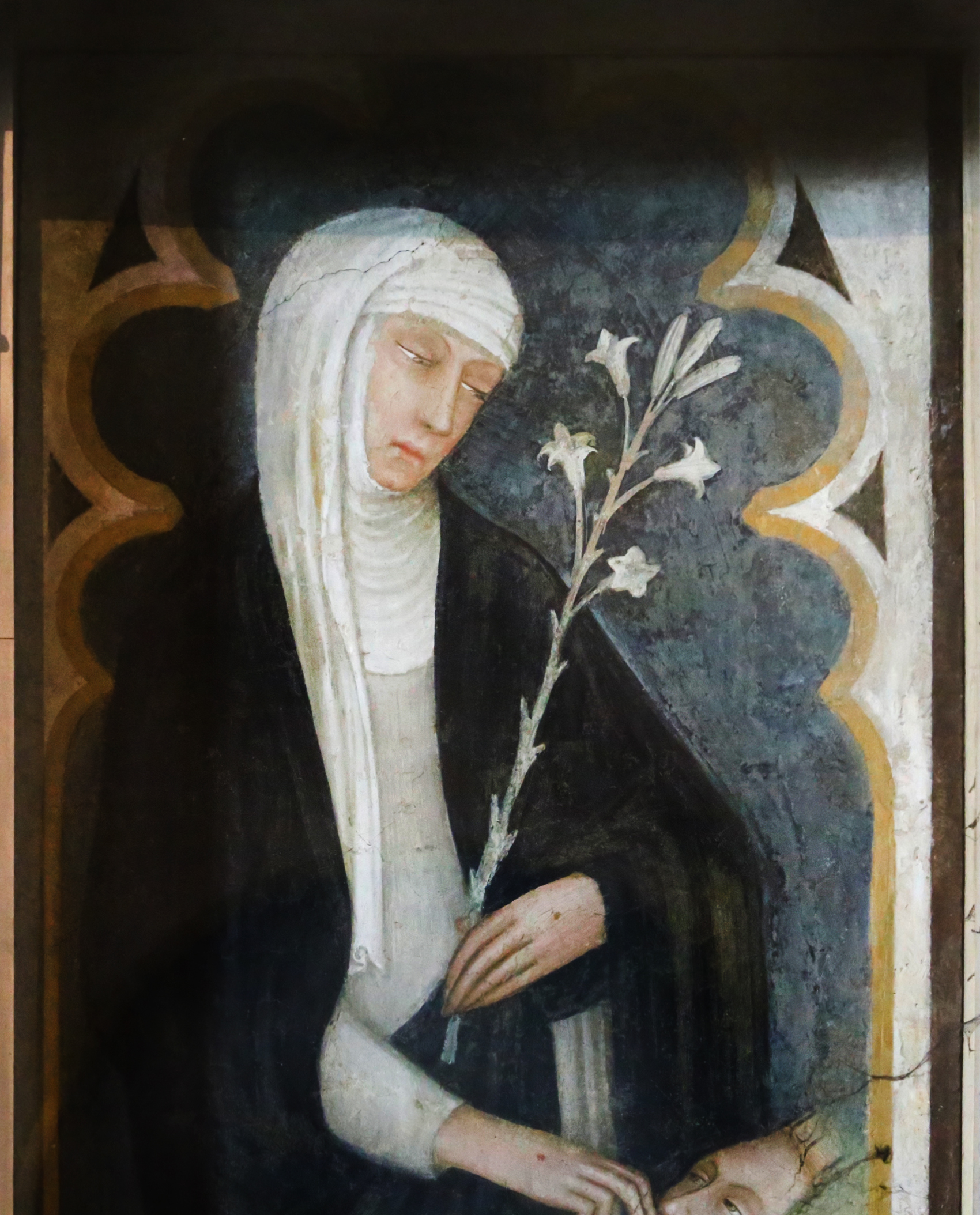
Fabio Ciambella: St Catherine of Siena and the power of her dialogic, dramatized word(s) in The Orchard of Syon
This paper will focus on St Catherine of Siena by exploring the power of her dialogic, dramatized word(s) in The Orcherd of Syon. This translation, published by Wynkyn de Worde in 1519, is derived from Cristofano di Gano Guidini’s Latin version of St. Catherine’s Dialogo. Conceived as a dialogue between Catherine herself and Christ, the book provides fertile ground for a pragmalinguistic analysis.